
Have you ever wondered how some animals can produce their own light in complete darkness? Deep beneath the ocean, inside dark caves, and even on quiet forest floors, certain living organisms create glowing patterns that look almost magical. Fireflies flashing in summer fields and tiny marine animals producing blue light are familiar examples of this remarkable ability.
This natural phenomenon is called bioluminescence. It is not simply an animal reflecting light from its surroundings. Instead, the organism creates light through a chemical reaction inside its own body. Bioluminescence has evolved in many unrelated groups of organisms, and scientists continue to study how and why it developed in different environments.
What Is Bioluminescence?
Bioluminescence is the production of visible light by a living organism through a chemical process. The word combines “bio,” meaning life, with “luminescence,” meaning the emission of light. Unlike sunlight or artificial light, bioluminescent light is generated internally by cells or specialized organs.
Many different organisms can produce this type of light. Fireflies are among the best-known examples, but bioluminescence is also found in certain fish, squid, jellyfish, worms, crustaceans, fungi, and microscopic marine organisms. Because these creatures are spread across very different branches of life, bioluminescence has evolved independently many times.
The light-producing reaction generally involves a light-emitting molecule called luciferin and an enzyme called luciferase. When the appropriate chemical ingredients interact, energy is released in the form of visible light. The exact molecules and reactions can vary greatly between species, which means there is no single universal bioluminescent system.
How Do Animals Produce Their Own Light?
At the basic level, bioluminescence happens when chemical energy is converted into light energy. In many organisms, luciferin reacts with oxygen with the help of luciferase. This reaction produces an excited chemical state, and when the molecule returns to a lower-energy state, some of the released energy appears as visible light.
This process can be extremely efficient. Much of the energy can be converted into light rather than heat, which is why bioluminescence is sometimes described as “cold light.” A glowing organism can therefore produce noticeable illumination without becoming hot in the way a traditional incandescent bulb does.
Different animals have developed different ways of controlling their chemical reactions. Some store the necessary substances separately until they are needed, while others use specialized cells known as photocytes. Some marine animals can even release glowing chemicals into the surrounding water instead of producing all their light directly on their bodies.
Why Do Some Animals Glow?
Animals do not glow simply because they look beautiful in darkness. In most cases, bioluminescence provides an important survival advantage. The purpose depends on the species, its environment, and the problems it needs to solve.
Bioluminescence can help animals find food, communicate with members of their species, attract mates, confuse predators, or avoid being eaten. In the deep ocean, where sunlight becomes extremely limited, producing light can be especially useful. For animals living in these environments, glowing may be as important as vision is for animals living near the surface.
Bioluminescence for Finding Food
Some animals use light as part of a hunting strategy. The deep ocean contains predators that live in almost complete darkness, so ordinary visual signals can be difficult to use. A glowing structure can become a lure that attracts smaller organisms toward a waiting predator.
The anglerfish is a famous example. Some species have a specialized structure near the head that produces light and acts as a lure. Small animals may approach the glowing point, apparently attracted by what looks like a possible source of food or another organism. The predator can then capture them with much less effort than active searching would require.
Other predators use bioluminescence in different ways. Some may produce short flashes that startle prey, while others use light to make themselves difficult to detect. These strategies demonstrate that glowing is not just one hunting technique but a flexible biological tool.
Using Light to Escape Predators
Bioluminescence can also help an animal avoid becoming someone else’s meal. When threatened, certain marine organisms release glowing material into the surrounding water. The sudden flash can startle a predator or make it difficult for the predator to see the escaping animal clearly.
Some organisms use another fascinating strategy called the burglar alarm effect. When a small glowing creature is attacked, its light may attract an even larger predator that could attack the original hunter. In this situation, the glow acts like an alarm signal rather than camouflage or a direct weapon.
Some animals can also produce light that makes their bodies harder to see from below. In the ocean, sunlight enters from above, creating a brighter background when viewed from underneath. Certain animals can produce light on their undersides that matches the surrounding brightness. This technique, known as counterillumination, can make their silhouettes less obvious to predators below.
Bioluminescence and Communication
Light can also serve as a communication system. Fireflies provide one of the clearest examples. Different species produce particular flashing patterns, and these signals can help individuals recognize potential mates of the correct species.
A firefly’s flash is not random. Timing, duration, brightness, and repetition can all carry information. In some species, males produce specific signals and females respond with flashes after particular delays. The interaction creates a visual conversation that takes place in darkness.
Marine organisms can also communicate with light, although their signals may be very different from those of fireflies. In an environment where sound and physical contact may be difficult to use, light can provide a rapid way to send information across short distances.
Fireflies and Their Famous Glow
Fireflies are probably the most familiar bioluminescent animals. Their flashes are created by a chemical reaction in specialized organs, usually located in the abdomen. The insect can control when the reaction occurs, allowing it to produce repeated flashes.
The main purpose of these flashes is communication, particularly during mating. Males and females of the same species often use recognizable patterns to find one another. Because different species may have different flash sequences, the signals can also reduce confusion between species.
Fireflies are especially interesting because their light-producing system is highly efficient. The chemical reaction converts a large proportion of its energy into light. This makes the soft glow of a firefly very different from the wasteful heat associated with many older forms of artificial lighting.
Why Is the Deep Ocean Full of Glowing Animals?
Bioluminescence is particularly common in the ocean. Scientists estimate that a large proportion of open-ocean animals capable of producing light live in the deep or dimly lit parts of marine environments.
The reason is closely connected to the absence of sunlight. As depth increases, sunlight becomes weaker until the environment becomes almost completely dark. In such conditions, even a small amount of light can become an effective biological signal.
The deep sea also contains complex food webs in which organisms must find prey and avoid predators without relying on daylight. Bioluminescence provides a solution to several of these challenges. A flash can communicate, attract prey, distract predators, or help an animal recognize its surroundings.
What Colors Can Bioluminescent Animals Produce?
Bioluminescent organisms can produce several colors, but blue and green are especially common in marine environments. This is partly related to how light travels through seawater. Blue wavelengths generally travel farther through clear ocean water than many other visible wavelengths.
Different organisms can produce different colors depending on their chemistry and anatomy. Some species generate green light, while others can produce yellow, orange, or red light. Certain deep-sea animals have specialized visual systems that are particularly sensitive to the wavelengths available in their environment.
Color can therefore have biological importance. A particular wavelength may help an organism communicate with its own species, attract prey, or remain less visible to predators. The choice of color is often connected to the animal’s habitat and lifestyle.
How Is Bioluminescence Different From Fluorescence?
Bioluminescence and fluorescence can look similar because both can make organisms appear to glow, but they work differently. Bioluminescence creates light through a chemical reaction inside a living organism.
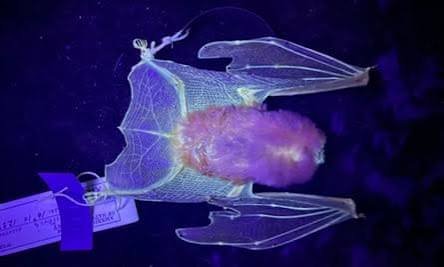
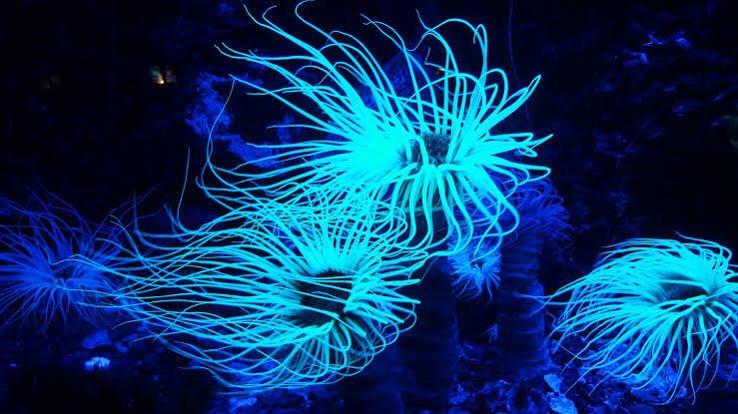
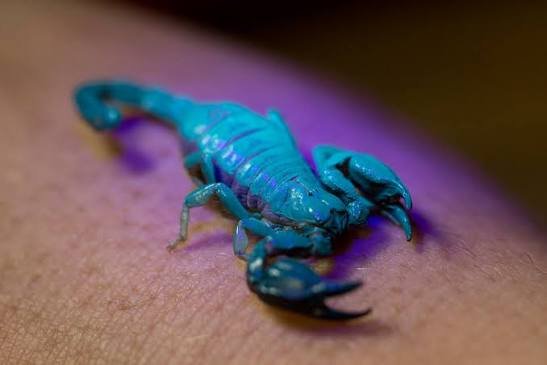
Fluorescence, on the other hand, requires an external source of energy, usually light. A fluorescent substance absorbs light at one wavelength and then releases part of that energy at another wavelength. If the external light disappears, fluorescence generally stops almost immediately.
This difference is important when studying glowing organisms. A fluorescent animal may appear bright under special lighting, but it is not necessarily producing its own light. A truly bioluminescent organism generates light through its own biological chemistry.
Do All Glowing Animals Make Their Own Light?
Not necessarily. Some animals appear to glow because they live in partnership with microorganisms that produce light. This relationship is called symbiosis, meaning two different organisms live closely together and interact in ways that can benefit one or both partners.
Certain marine animals contain specialized bacteria inside organs that function like natural lamps. The bacteria produce the light, while the host provides them with a suitable environment and nutrients. In return, the host can use the bacterial light for defense, communication, camouflage, or hunting.
This partnership shows that bioluminescence does not always require an animal to manufacture every component of its light-producing system. Evolution can also create relationships in which one organism supplies the light and another provides the biological environment.
Why Don’t Humans Naturally Glow?
Humans do produce extremely tiny amounts of light as a result of chemical reactions occurring inside our cells. However, this emission is far too weak for our eyes to detect.
Our bodies constantly perform chemical reactions that involve energy transfer. Some of these processes can produce very small amounts of photons, but the intensity is many orders of magnitude below the level needed for visible glowing.
Unlike fireflies or deep-sea animals, humans did not evolve specialized organs or chemical systems designed to produce useful visible light. There has been little evolutionary advantage for humans to develop a bright biological light source because we have access to other ways of seeing and communicating in darkness.
How Do Scientists Study Bioluminescence?
Scientists study bioluminescence by examining the organisms, chemical reactions, genes, cells, and biological structures involved in light production. Laboratory experiments can help researchers identify the molecules responsible for the glow and determine how organisms control their reactions.
Modern genetic techniques have made this field even more informative. Researchers can investigate which genes are associated with light-producing proteins and compare those genes across different species. These studies help explain how similar abilities evolved in organisms that may be only distantly related.
Researchers also use sensitive cameras and specialized instruments to detect extremely weak biological light. These tools allow scientists to observe organisms that appear completely dark to the human eye. Studying bioluminescence can therefore reveal biological activity that would otherwise remain invisible.
Can Bioluminescence Help Humans?
Bioluminescence has already inspired scientific research and technological ideas. The molecules responsible for producing light can be useful as biological markers in laboratory research. Scientists can attach light-producing genes or proteins to biological systems and use the resulting signal to track activity.
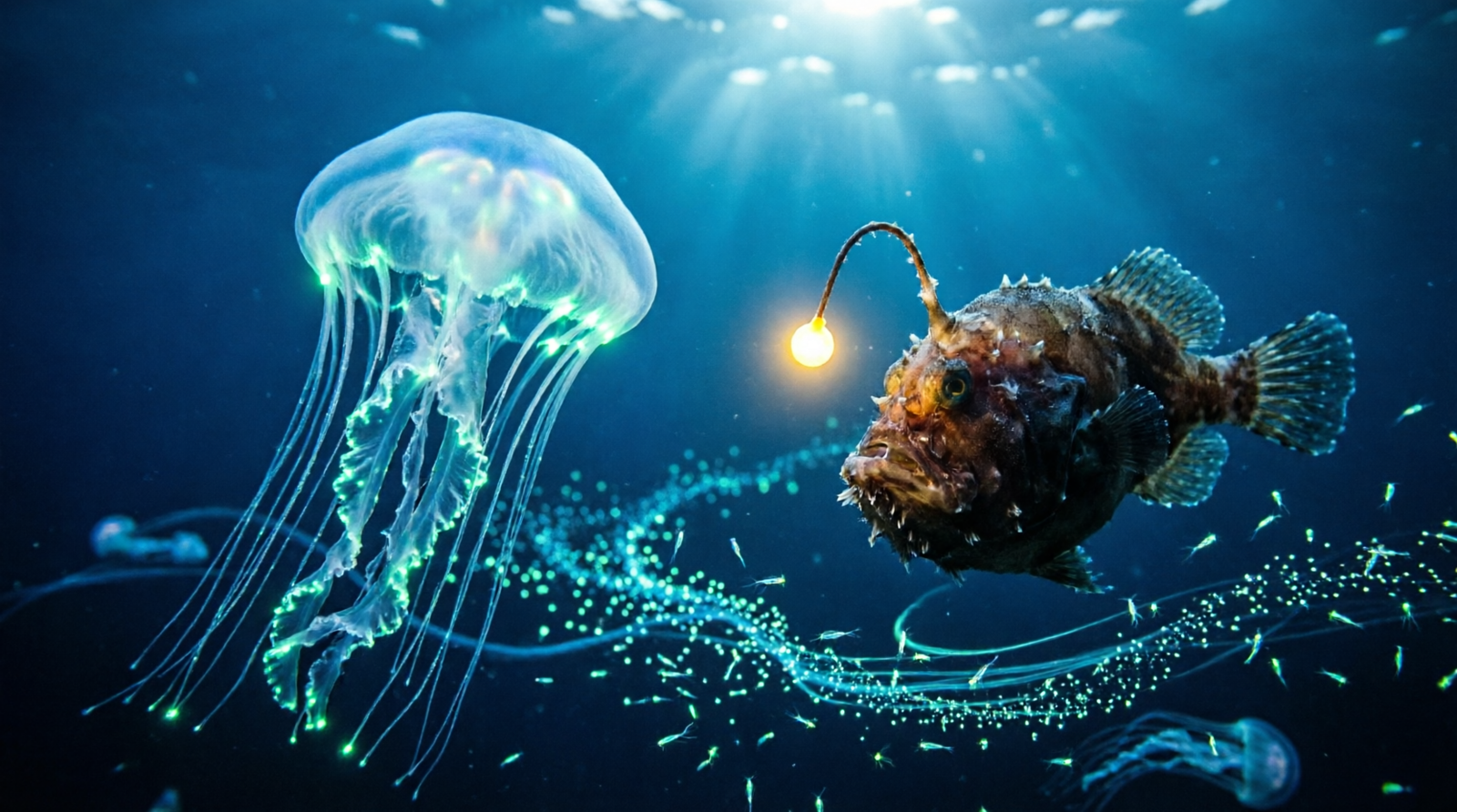
Researchers also study bioluminescent chemistry because it can provide efficient ways of producing detectable signals. Such systems have applications in areas such as cell biology, genetics, environmental research, and medical science.
The goal is not necessarily to create glowing humans or animals. Instead, scientists are interested in understanding how nature produces light so efficiently and how those biological mechanisms can be adapted for useful research tools.
Is Bioluminescence Always Beneficial?
Producing light can be useful, but it also has potential disadvantages. A glowing organism may become easier for predators to notice, especially if the light is produced at the wrong time or in the wrong location.
Because of this, many organisms have developed precise control over their light production. They may flash only briefly, produce light only when threatened, or regulate brightness according to their surroundings. Some can turn their light-producing systems on and off rapidly.
Evolution often involves balancing benefits and costs. Bioluminescence can provide food, communication, or protection, but it can also reveal an animal’s location. Successful species are therefore likely to use their light in ways that provide more advantages than disadvantages.
Where Else Can Bioluminescence Be Found?
Bioluminescence is not limited to animals. Certain fungi, bacteria, and other organisms can also produce light. Some glowing fungi are sometimes seen on decaying wood or plant material in dark forests.
Marine microorganisms are another important example. Certain tiny organisms called dinoflagellates can produce flashes of blue light when disturbed by movement in the water. Waves, swimming animals, or boats moving through the water can sometimes trigger visible glowing trails.
These examples show that bioluminescence is a broad biological phenomenon rather than a feature restricted to a particular type of animal. It has appeared in many different forms throughout the natural world.
Why Is Bioluminescence Important in Nature?
Bioluminescence contributes to relationships between predators, prey, mates, and microorganisms. A single glowing organism can be part of a much larger ecological system in which light influences feeding behavior, reproduction, and survival.
In the ocean especially, light can have a major influence on how organisms interact. A flash may attract one animal while warning another. A glowing signal may help a mate find a partner or help a predator locate food. The same basic ability can therefore serve completely different purposes in different species.
Studying these relationships helps scientists understand how animals adapt to their environments. Bioluminescence is a clear example of how evolution can transform chemistry into a useful biological behavior.
People Also Ask About Bioluminescence
What animals can glow in the dark?
Fireflies, some jellyfish, certain squid, deep-sea fish, crustaceans, worms, and other organisms can produce bioluminescent light. Many marine species are especially well known for this ability.
Why do fireflies glow?
Fireflies mainly use their flashes to communicate, especially during mating. Different species often have characteristic flash patterns that help individuals identify appropriate partners.
Can fish produce their own light?
Yes. Several fish species have evolved bioluminescent organs or structures. Some use light to attract prey, communicate, camouflage themselves, or defend against predators.
Why is blue bioluminescence common in the ocean?
Blue light travels relatively well through seawater compared with many other visible wavelengths. This makes blue light useful for communication and other biological purposes in marine environments.
Is bioluminescence the same as glowing under ultraviolet light?
No. Bioluminescence is produced through a chemical reaction by a living organism. Glowing under ultraviolet light is often fluorescence, which requires external light energy.
Do humans produce any light?
Human cells can produce extremely weak photon emissions during normal chemical activity, but the amount is far too small for human eyes to see.
Frequently Asked Questions
What causes an animal to glow?
An animal glows when a chemical reaction produces visible light. Many systems involve molecules such as luciferin and enzymes such as luciferase, although the exact chemistry differs among organisms.
What is the main purpose of bioluminescence?
There is no single purpose. Depending on the species, bioluminescence can help with hunting, communication, attracting mates, avoiding predators, or camouflage.
Are all bioluminescent organisms animals?
No. Bacteria, fungi, and some other organisms can also produce their own light. Bioluminescence has evolved across many different forms of life.
Can bioluminescent animals control their light?
Many can. They may control when their light-producing chemicals interact, regulate specialized cells, or use physical structures to control the direction and intensity of their glow.
Why are deep-sea animals often bioluminescent?
The deep ocean has very little natural sunlight, creating strong pressure for organisms to develop alternative ways of communicating, hunting, hiding, and finding mates. Bioluminescence can provide solutions to several of these challenges.
Is bioluminescence useful to scientific research?
Yes. Light-producing proteins and genes are widely useful as biological markers. Researchers can use them to observe cellular processes and track activity that would otherwise be difficult to detect.
Conclusion
Bioluminescence is one of nature’s most fascinating examples of biological chemistry. From fireflies flashing across summer evenings to deep-sea animals producing light in complete darkness, different organisms have developed remarkable ways to turn chemical energy into visible signals. Their glowing abilities can help them find food, communicate, attract mates, escape predators, and remain hidden in challenging environments.
The study of bioluminescence also demonstrates how closely biology and chemistry are connected. What appears to be a mysterious natural glow is actually the result of carefully controlled molecular reactions shaped by evolution. By studying these organisms, scientists gain a better understanding of how life adapts to different environments and how natural biological systems can inspire new scientific discoveries.