
Earth feels completely still beneath our feet, but our planet is constantly rotating around its axis. At the equator, the surface is moving at roughly 1,670 kilometers per hour because of this rotation. We do not notice the motion because everything around us, including the atmosphere and oceans, is moving with Earth. But what would happen if this rotation suddenly stopped?
A sudden halt in Earth’s rotation would create an extreme planetary disaster. The ground might stop rotating, but the air, oceans, and objects on the surface would continue moving because of inertia. Enormous winds, powerful ocean movements, earthquakes, and changes in Earth’s climate could follow. The consequences would depend greatly on how quickly the planet stopped, but a truly sudden stop would be catastrophic.
Why Does Earth Spin?
Earth has been rotating since the early stages of its formation billions of years ago. The young Solar System contained enormous amounts of moving material, and as particles came together to form planets, their existing motion contributed to planetary rotation. Once Earth began spinning, its angular momentum helped maintain that motion.
Earth’s rotation is not powered by an engine or an external force. In space, there is very little resistance capable of stopping a planet’s rotation quickly. Although interactions with the Moon and the oceans gradually slow Earth’s rotation by tiny amounts over extremely long periods, the planet continues to spin today at a remarkable rate.
How Fast Is Earth Moving?
The speed of Earth’s rotation depends on where you are located. At the equator, the surface travels around Earth’s axis at approximately 1,670 kilometers per hour. As you move toward the poles, the rotational speed decreases because the circumference of the circle traveled around the axis becomes smaller.
At the North and South Poles, a person can rotate in place once every approximately 24 hours without traveling around a large circular path. This difference in rotational speed would make the effects of a sudden stop much stronger near the equator than near the poles.
What Is Inertia?
Inertia is one of the most important concepts for understanding what would happen if Earth stopped spinning. An object in motion tends to continue moving unless an external force changes its motion. Since Earth’s surface, atmosphere, oceans, buildings, and living organisms are all moving along with the rotating planet, they would not automatically stop just because the ground suddenly did.
Imagine standing inside a moving vehicle that stops extremely quickly. Your body continues moving forward while the vehicle stops beneath you. A sudden stop in Earth’s rotation would involve the same basic physical principle, but on a planetary scale. The difference is that Earth’s rotational speed is enormous compared with the speed of an ordinary vehicle.
What Would Happen Immediately?
If Earth somehow stopped rotating instantly, the solid surface would stop moving relative to Earth’s axis, but the atmosphere and oceans would retain much of their rotational velocity. Near the equator, this could mean air and water continuing to move eastward at extremely high speeds relative to the ground.
The result would be devastating. Powerful winds could sweep across continents, while enormous waves would move across ocean basins. Buildings, forests, vehicles, and other surface objects could be thrown or severely damaged as the moving environment interacted with the stationary ground.
Would People Be Thrown Into Space?
Despite the incredible speed of Earth’s rotation, people would not simply fly into space if Earth suddenly stopped. Earth’s gravity is much stronger than the outward effect associated with rotation. However, near the equator, rotation does slightly reduce the effective weight of objects because rotational motion produces an outward acceleration.
If Earth’s rotation stopped, that effect would disappear. People would actually become slightly heavier, not lighter. The immediate danger would come from the violent movement of the atmosphere, oceans, and surface environment rather than from people being launched into space.
What Would Happen to the Atmosphere?
The atmosphere is currently rotating along with Earth. If the ground suddenly stopped while the atmosphere retained its motion, the result would be enormous winds relative to the surface. Air near the equator would have particularly large horizontal velocities because it currently shares the planet’s fastest rotational movement.
These winds would be far beyond the strength of ordinary hurricanes. They could destroy structures, strip vegetation from landscapes, transport enormous quantities of dust, and dramatically reshape the surface. The atmosphere would gradually adjust over time, but the initial transition would be one of the most violent events imaginable.
What Would Happen to the Oceans?
The oceans would also continue moving because water has inertia. Large amounts of seawater would rush across coastlines and continents as the planet’s rotation changed abruptly. Coastal areas would face extraordinary flooding and destructive water movement.
The exact pattern would depend on Earth’s geography, the distribution of continents, ocean depth, and the speed at which rotation stopped. Ocean water would not simply form one uniform wave around the planet. Instead, complex movements would develop as water interacted with land, gravity, and the changing rotational conditions.
Would There Be Giant Tsunamis?
Huge tsunami-like waves would be expected in many regions after a sudden halt. The water would continue moving relative to the ground, and the abrupt mismatch between moving oceans and stationary land would produce enormous disturbances.
These waves could travel across ocean basins and repeatedly strike coastlines. Unlike ordinary tsunamis, which are usually caused by events such as underwater earthquakes or landslides, these planetary-scale waves would result from the sudden change in Earth’s rotational state.
What Would Happen to Buildings and Cities?
Cities would be exposed to several different hazards at once. Extreme winds could damage or destroy structures, while moving water could flood coastal regions. Flying debris would create additional dangers, and ground stresses could cause widespread structural failures.
Buildings are designed to withstand many environmental forces, including wind and earthquakes, but they are not designed for atmospheric movement on the scale that would occur after a sudden planetary stop. Infrastructure such as bridges, power networks, roads, communication systems, and water supplies would be severely disrupted.
Would Earthquakes Occur?
A sudden change in Earth’s rotational motion could place enormous stresses on the planet’s crust and interior. Earth is not a perfectly rigid object, and its different layers respond to forces in complex ways. A dramatic change in rotation could contribute to significant geological disturbances.
It would be difficult to predict the exact location and strength of every earthquake because Earth’s crust contains many existing faults and areas of accumulated stress. However, a planetary-scale change of this magnitude could trigger widespread geological instability.
What Would Happen to Earth’s Magnetic Field?
Earth’s magnetic field is primarily generated by movements of electrically conducting material in the outer core. Earth’s rotation plays an important role in the broader dynamics of the planet, but stopping the surface rotation would not mean the magnetic field would instantly disappear.
The geodynamo inside the outer core operates through complex interactions involving heat, convection, composition, and rotation. If Earth’s rotation somehow stopped permanently, the long-term behavior of the magnetic field could change, but scientists could not simply assume that it would vanish immediately.
Would Day and Night Change?
One of the most dramatic long-term effects would involve the length of the day. Earth’s current rotation produces the approximately 24-hour cycle of day and night. If the planet stopped rotating relative to the stars, the ordinary daily cycle would disappear.
However, Earth would still orbit the Sun. If Earth stopped rotating but continued its orbit, one solar day would eventually become roughly one year long, depending on exactly what “stopping” meant. Some regions could experience extremely long periods of sunlight followed by extremely long periods of darkness.
What Would Long Days Do to Climate?
Extremely long periods of sunlight and darkness would have major effects on temperature. Areas exposed to the Sun for extended periods could become much hotter, while regions experiencing prolonged darkness could become dramatically colder.
The atmosphere and oceans would redistribute heat and prevent temperatures from behaving as simply as a bare surface would. Nevertheless, the familiar daily heating and cooling cycle would be replaced by a much slower planetary pattern, creating severe challenges for ecosystems and climate systems.
Would Plants Survive?
Plants depend heavily on predictable relationships between light, temperature, water, and atmospheric conditions. A sudden change in the day-night cycle would disrupt many biological processes. Photosynthesis requires light, while plant respiration continues regardless of daylight.
Some plants might survive in regions where temperatures and moisture remained within tolerable ranges, especially if the atmosphere and oceans redistributed heat effectively. Many others, however, would struggle with prolonged heating, freezing conditions, altered water cycles, and ecosystem disruption.
What Would Happen to Animals?
Animals would also face major problems because biological systems are adapted to Earth’s existing cycles. Many species use day and night to regulate feeding, sleeping, migration, reproduction, and predator avoidance.
If daylight and darkness lasted for extremely long periods, these natural rhythms would become disrupted. Animals living near the surface would also have to cope with changes in temperature, vegetation, water availability, and food supplies. Species unable to adapt quickly would face severe population declines.
Would Gravity Change?
Earth’s gravity would not suddenly disappear if the planet stopped rotating. Gravity is caused primarily by Earth’s mass, so the planet would continue attracting objects toward its center.
However, the apparent weight of objects would change slightly because Earth’s rotation currently produces an outward centrifugal effect. The difference would be most noticeable at the equator, where rotational speed is greatest. Without rotation, objects at the equator would experience slightly greater effective gravitational acceleration.
Would Earth Become a Different Shape?
Earth is not a perfect sphere. Its rotation causes a slight equatorial bulge, making the planet wider around the equator than from pole to pole. If rotation stopped permanently, Earth’s shape would gradually adjust toward a more spherical form.
This would not happen instantly. Earth’s crust, mantle, oceans, and interior respond over different timescales. Over a very long period, the redistribution of material caused by the loss of rotational effects could change sea levels and the shape of the planet.
What Would Happen to Sea Levels?
The redistribution of Earth’s oceans would be one of the most complicated long-term consequences. Earth’s current rotation contributes to the shape of the oceans and the distribution of water around the planet. Removing rotational effects would gradually change where water settles.
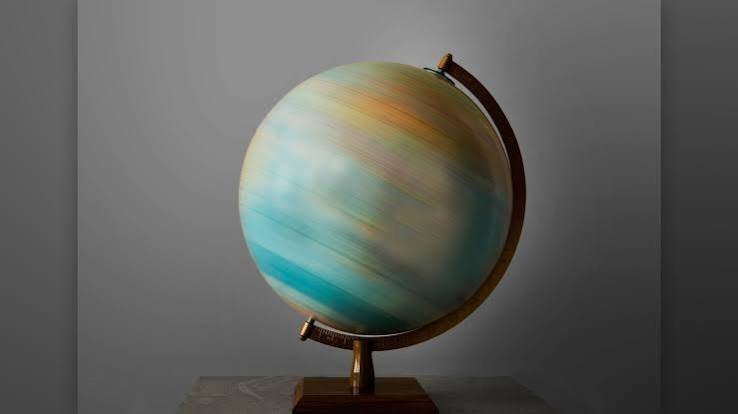
As the planet adjusted, some areas that are currently ocean-covered could become relatively drier, while water could accumulate in other regions. The exact pattern would depend on Earth’s changing shape, gravitational effects, land elevation, and the movement of water across continents.
Would the Equator Still Matter?
The equator would remain an important geographic reference because it is defined by Earth’s rotational axis and geometry. However, many effects associated with rotation would disappear if the planet stopped spinning.
The Coriolis effect, which influences the movement of air and water on a rotating Earth, would also change dramatically. Weather systems would no longer behave according to the same rotational patterns that shape today’s hurricanes, trade winds, ocean currents, and atmospheric circulation.
What Would Happen to Weather?
Modern weather is strongly influenced by Earth’s rotation. The Coriolis effect causes moving air and water to curve relative to Earth’s surface. This helps determine the large-scale structure of atmospheric circulation and weather systems.
Without rotation, the familiar organization of global winds would change. Heating from the Sun would still cause air to rise and move, but atmospheric circulation would develop according to a very different physical system. Storms, wind belts, and ocean currents would all be transformed.
Would Hurricanes Still Form?
The hurricanes we know today depend partly on Earth’s rotation. The Coriolis effect helps rotating storm systems develop and maintain their circulation. Near the equator, this effect is especially weak, which is one reason tropical cyclones rarely form directly at the equator.
If Earth stopped rotating, the Coriolis effect would disappear. Tropical weather would still exist because solar heating would continue to drive atmospheric motion, but hurricanes as we recognize them would no longer form in the same way.
Could Humans Survive?
A sudden complete stop would make survival extremely difficult. The initial winds, ocean movements, flooding, and physical destruction would likely kill enormous numbers of people and organisms. Modern cities and infrastructure would not be capable of handling such an event.
If a hypothetical civilization somehow survived the initial catastrophe, it would then face a transformed climate and geography. Human settlements would need to adapt to long periods of daylight and darkness, altered temperatures, new coastlines, disrupted agriculture, and radically different atmospheric circulation.
What If Earth Stopped Slowly?
The situation would be completely different if Earth’s rotation gradually slowed over millions of years. Organisms and ecosystems would have much more time to adapt to changing conditions. The atmosphere and oceans would adjust progressively instead of being violently thrown out of equilibrium.
A slow change would still transform Earth’s climate and biological systems, but it would not produce the instantaneous catastrophic effects associated with a sudden stop. This distinction is extremely important when imagining planetary changes because the timescale of an event can be just as important as the event itself.
Would Earth Ever Stop Spinning Naturally?
Earth is not expected to suddenly stop rotating naturally. The Moon’s gravitational influence creates ocean tides that slowly transfer rotational energy away from Earth. This process causes Earth’s rotation to slow by a very small amount over extremely long periods.
The change is so gradual that it has no meaningful effect on everyday human life. Earth will continue rotating for an extraordinarily long time, and any theoretical future state involving major rotational changes would occur on timescales vastly beyond human history.
Why Is Earth’s Rotation Important?
Earth’s rotation influences much more than the length of a day. It affects atmospheric circulation, ocean currents, the Coriolis effect, the planet’s shape, effective gravity, and many aspects of climate. Life has evolved under these conditions for billions of years.
Because Earth’s atmosphere, oceans, ecosystems, and human societies are all adapted to a rotating planet, a sudden change would have consequences throughout nearly every part of the Earth system. Rotation is therefore an essential part of the physical environment in which life exists.
People Also Ask
What would happen if Earth stopped spinning for one second?
Even a very short interruption would be difficult to imagine physically because Earth’s surface, atmosphere, and oceans would need to respond to an enormous change in motion. If the solid ground stopped suddenly while everything else continued moving, powerful forces and destructive winds could occur.
Would people fly off Earth if it stopped spinning?
No. Earth’s gravity would continue pulling people toward the surface. The major danger would come from inertia, which would cause the atmosphere, oceans, and surface objects to continue moving relative to the suddenly stationary ground.
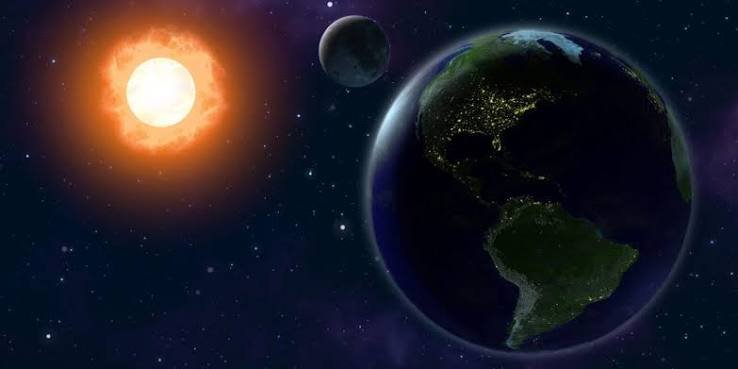
Would there still be gravity if Earth stopped rotating?
Yes. Earth’s gravity comes primarily from its mass and would continue to exist. Effective gravity would actually become slightly stronger at the equator because the outward rotational effect would disappear.
Would the Sun still rise if Earth stopped spinning?
Earth would continue orbiting the Sun, but the normal daily sunrise and sunset cycle would disappear. Depending on the exact scenario, regions could experience extremely long periods of daylight and darkness.
Would Earth’s oceans move if the planet stopped?
Yes. Ocean water has inertia and would continue moving when the solid surface suddenly stopped. This could produce enormous flooding and large-scale ocean disturbances.
Would Earth’s atmosphere stop with the planet?
Not immediately. If the solid Earth suddenly stopped, the atmosphere would retain much of its existing motion. The resulting winds relative to the surface would be extraordinarily powerful.
Frequently Asked Questions
Why does Earth rotate?
Earth rotates because of angular momentum inherited from the material and movements involved in the formation of the Solar System. Once Earth began rotating, there was no strong force acting against that motion, allowing the rotation to continue.
How fast does Earth rotate?
At the equator, Earth’s surface moves at approximately 1,670 kilometers per hour. The rotational speed decreases toward the poles because the distance traveled around Earth’s axis becomes smaller.
What causes Earth to slow down?
The gravitational interaction between Earth and the Moon produces tides that gradually transfer rotational energy away from Earth. This causes Earth’s rotation to slow extremely slightly over long periods.
Would Earth’s magnetic field disappear if it stopped spinning?
Not instantly. Earth’s magnetic field is generated mainly by processes occurring in the liquid outer core. Rotation contributes to the geodynamo, but the magnetic field would not simply switch off the moment the surface stopped rotating.
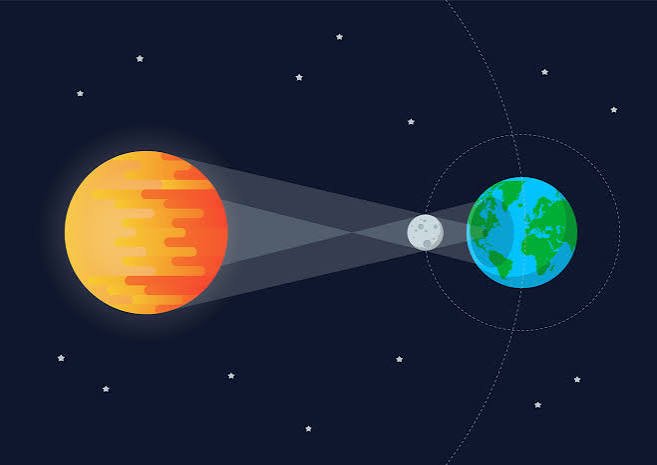
Would plants die if Earth stopped spinning?
Many plants would face severe challenges because of changes in light, temperature, water availability, and climate. Some species might survive in favorable regions, but ecosystems would be dramatically disrupted.
Would there be stronger earthquakes?
A sudden planetary-scale change in rotational motion could disturb Earth’s crust and contribute to geological instability. The exact earthquake activity would depend on complex interactions within Earth’s interior and crust.
Could humans adapt to a non-rotating Earth?
If the change happened extremely slowly, humans and other organisms might have opportunities to adapt technologically and biologically. If Earth stopped suddenly, however, the initial environmental destruction would make survival extremely difficult.
Conclusion
If Earth suddenly stopped spinning, the consequences would be far more dramatic than simply having longer days. The atmosphere and oceans would continue moving because of inertia, producing devastating winds and enormous ocean disturbances. The loss of rotation would also alter gravity’s effective strength, weather systems, ocean circulation, and the familiar cycle of day and night. Earth itself would remain gravitationally intact, but the surface environment would become almost unrecognizable.
Fortunately, there is no realistic mechanism that would cause Earth to stop rotating suddenly. Our planet’s rotation is a stable result of its angular momentum and the physical history of the Solar System. Although Earth’s rotation is gradually slowing over immense periods, the change is far too small to create an immediate threat. The thought experiment nevertheless shows how deeply rotation is connected to Earth’s atmosphere, oceans, climate, geology, and the conditions that make life possible.