
Human eyes come in a fascinating range of colors, including brown, blue, green, hazel, gray, and several combinations that do not fit neatly into one category. Eye color is one of the most noticeable physical traits that can vary from person to person, and for a long time, scientists believed that it was controlled by only one or two genes.
Modern genetics has shown that the reality is much more complicated. Eye color develops through interactions among multiple genes that influence how much melanin is produced, stored, and distributed within the iris. The structure of the iris and the way light interacts with its tissues also contribute to the final appearance of the eye. This is why two people with similar family backgrounds can sometimes have noticeably different eye colors.
What Determines Human Eye Color?
The color of a person’s eyes is mainly related to the amount and distribution of melanin in the iris. Melanin is the same general pigment family responsible for much of the coloration in skin and hair, but its concentration and distribution in the eye produce different visual effects.
People with a greater amount of melanin in the iris generally have darker-looking eyes, while people with less melanin may have lighter-looking eyes. However, eye color is not determined simply by having more or less pigment. The organization of pigment within the iris and the microscopic structure of the tissue also influence how light is reflected and scattered.
What Is the Iris?
The iris is the colored part of the eye surrounding the pupil. It contains muscles that control the size of the pupil, allowing the eye to regulate how much light enters.
The visible color of the iris comes from its pigment and microscopic structure. The front portion of the iris contains cells and connective tissue that interact with incoming light. Differences in pigmentation and tissue structure create the wide range of colors observed in humans.
What Is Melanin?
Melanin is a group of natural pigments produced by specialized cells. In the iris, melanin absorbs certain wavelengths of light and contributes strongly to the eye’s visible coloration.
The amount of melanin in the iris varies among individuals. Higher levels generally absorb more incoming light and produce darker brown shades. Lower amounts allow structural effects within the iris to become more visually important, contributing to colors such as blue, gray, or green.
Why Are Brown Eyes So Common?
Brown eyes generally contain relatively high levels of melanin in the iris. The pigment absorbs a substantial amount of incoming light, giving the eyes their characteristic darker appearance.
Brown eye color is common in many populations around the world. However, brown eyes are not all identical. They can range from light golden-brown shades to very deep brown depending on the amount and distribution of pigment.
Why Are Blue Eyes Blue?
Blue eyes contain relatively little melanin in the front portion of the iris compared with brown eyes. The blue appearance is largely produced by the way light interacts with the iris rather than by the presence of a blue pigment.
When light enters the iris, shorter wavelengths of light are scattered more strongly by its microscopic structure. Some of this scattered light returns toward the observer, producing a blue appearance. This is related to a physical phenomenon called light scattering.
Why Do Green Eyes Appear Green?
Green eyes are relatively uncommon and are produced by a combination of factors. They generally contain more melanin than blue eyes but less than many brown eyes.
The green appearance can result from the interaction between a modest amount of pigment and the way light scatters through the iris. Yellowish or golden pigmentation can combine with scattered blue light to create different shades of green.
What Causes Hazel Eyes?
Hazel eyes often contain a mixture of brown, green, gold, and sometimes amber-like tones. Their appearance can vary depending on lighting conditions and the distribution of pigment across different regions of the iris.
Unlike a single uniform color, hazel eyes may have more pigmentation around the pupil and lighter coloration toward the outer iris. This uneven distribution contributes to their distinctive appearance and can make hazel eyes seem to change color under different conditions.
Are Gray Eyes Different From Blue Eyes?
Gray and blue eyes can appear similar, but differences in iris structure, pigmentation, and light scattering can produce different visual effects. Gray eyes may contain very little pigment while having structural characteristics that create a less saturated appearance.
Lighting and surroundings can also influence whether an eye looks gray, blue, or somewhere between the two. This illustrates that perceived eye color is not determined by pigment alone.
Is Eye Color Controlled by One Gene?
No. Eye color is considered a complex genetic trait influenced by multiple genes. Early explanations often described eye color using a simple dominant-and-recessive model, but that model does not accurately explain the full range of human eye colors.
Several genes influence biological pathways involved in melanin production and distribution in the iris. The combined effects of these genes help determine how much pigment develops and where it is located.
Which Genes Influence Eye Color?
Researchers have identified several genes associated with human eye color. Among the most important are OCA2 and HERC2, which are located near each other on chromosome 15 and have major effects on iris pigmentation.
Other genes also contribute to variation in eye color. These include genes involved in pigmentation pathways and cellular processes. Because multiple genetic factors can contribute, predicting a child’s exact eye color from parental eye color alone is not always possible.
What Does the OCA2 Gene Do?
The OCA2 gene plays an important role in pigmentation. It is involved in the function of specialized cellular structures called melanosomes, which store and handle melanin.
Variations affecting OCA2 can influence how much melanin is present in the iris. Certain genetic variants are associated with darker pigmentation, while others are associated with lower pigmentation and lighter eye colors.
What Does the HERC2 Gene Have to Do With Eye Color?
HERC2 is another important gene in eye-color genetics. A particular region of HERC2 can influence the activity of OCA2, helping regulate how much pigment-related activity occurs.
This relationship demonstrates why eye color cannot always be explained by looking at genes individually. One gene can influence the activity of another, and the combined effects can affect the final amount of melanin produced in the iris.
How Do Parents Pass Eye Color to Their Children?
Children inherit genetic information from both parents. Each parent contributes genetic variants that can influence traits such as pigmentation.
Because eye color involves multiple genes, a child may inherit a combination that produces an eye color different from either parent’s visible eye color. Family history can therefore reveal possibilities that are not immediately obvious by looking only at the parents.
A simple Punnett square can help illustrate how genetic variants may be inherited, although ordinary two-gene examples cannot fully represent the complexity of real human eye color.
Can Two Brown-Eyed Parents Have a Blue-Eyed Child?
Yes, it is possible. The old idea that two brown-eyed parents can never have a blue-eyed child is an oversimplification.
Parents can carry genetic variants associated with lighter pigmentation without displaying a light eye color themselves. When a child inherits a particular combination of variants from both parents, the resulting pigmentation pattern can sometimes produce lighter eyes.
Can Siblings Have Different Eye Colors?
Yes. Brothers and sisters can inherit different combinations of genetic variants from the same parents. Because multiple genes contribute to eye color, small differences in inherited genetic combinations can produce noticeable differences in pigmentation.
This is one reason families can contain people with brown, hazel, green, or blue eyes even when they share the same parents. The genetic possibilities are not limited to simply matching one parent’s eye color.
Why Can Babies’ Eye Color Change?
Some babies are born with eyes that appear lighter than their eventual adult color. This can happen because the amount of melanin in the iris may increase during early development.
As pigment-producing cells become more active, the iris can gradually develop more pigmentation. For some children, this means their eyes become darker during infancy or early childhood. The timing and extent of these changes vary between individuals.
When Does Eye Color Become Permanent?
There is no single age at which every person’s eye color becomes permanently fixed. Many changes occur during infancy and early childhood as pigment develops in the iris.
For many children, their eye color becomes relatively stable during the first few years of life. However, subtle changes in appearance can still occur later because of lighting, aging, health-related changes, or differences in how the iris is perceived.
Why Can Eye Color Look Different in Different Lighting?
Eye color is partly a visual phenomenon. The amount and direction of light entering the eye can change how the iris appears.
Bright sunlight, indoor lighting, shadows, and camera exposure can emphasize different parts of the iris. A person’s eyes may therefore appear greener, bluer, browner, or grayer under different lighting without the underlying pigment actually changing.
Can Clothing Change How Eye Color Looks?
Clothing does not normally change the actual pigmentation of the iris, but surrounding colors can affect visual perception. A blue or green shirt may make similar tones in the iris appear more noticeable.
This happens because the human visual system interprets colors partly in relation to nearby colors and brightness. As a result, the same eyes can appear somewhat different depending on the person’s surroundings.
Can Eye Color Change Naturally During Adulthood?
For most people, major natural changes in eye color do not occur during adulthood. The genetic and developmental processes responsible for iris pigmentation are largely established earlier in life.
However, some people may notice changes in the appearance of their eyes over time. Aging, changes in the tissues of the eye, certain medical conditions, or medications can sometimes affect how the iris looks. A genuine unexplained change in eye color should be evaluated by an eye-care professional.
What Is Heterochromia?
Heterochromia is a condition in which the eyes have different colors or different areas of pigmentation. A person may have one eye that is a different color from the other, or one iris may contain noticeably different colored sections.
The appearance can result from differences in pigment distribution or other biological factors. Some forms are present from birth, while others develop later. Heterochromia is often harmless, but a newly developed change should not automatically be assumed to be purely cosmetic.
What Causes Different Colors Within One Eye?
Sometimes pigment is not distributed evenly throughout an iris. One area may contain more melanin than another, producing visible patterns or patches of different colors.
This uneven distribution can create striking appearances, including rings around the pupil or differently colored sections. Genetic factors influence pigmentation patterns, while the structure of the iris affects how those patterns interact with light.
Is Eye Color Related to Ancestry?
Eye-color patterns vary among populations because genetic variants associated with pigmentation have different frequencies in different ancestral groups. Certain light eye colors are more common in some populations, while darker eye colors are widespread globally.
However, eye color alone cannot reliably determine a person’s ancestry. Human genetic variation is complex, and the same visible eye color can occur in people with very different backgrounds.
Why Are Light Eye Colors Less Common Globally?
Lighter eye colors are less common worldwide than brown eyes. Brown pigmentation is widespread across many populations, while blue, green, and other lighter shades occur at higher frequencies in certain regions.
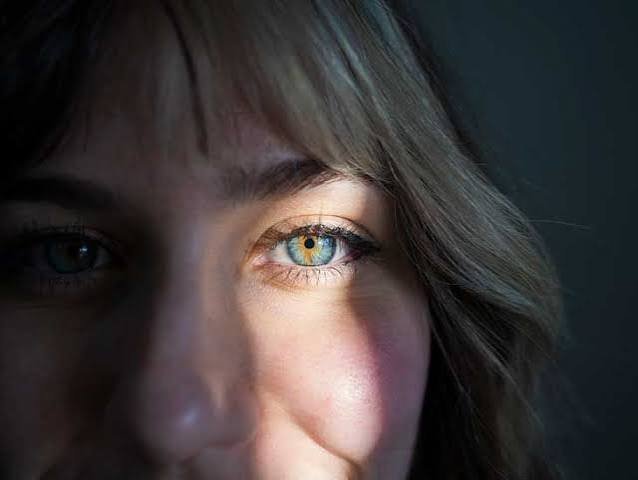
Population history, migration, genetic variation, and natural selection have all influenced the distribution of pigmentation-related genetic variants. The result is a broad global pattern rather than a simple division between particular eye colors.
Did Blue Eyes Come From a Genetic Change?
Research suggests that many people with blue eyes share a particular genetic change near the HERC2 and OCA2 region that reduces OCA2 activity and therefore lowers iris pigmentation.
Scientists have proposed that this variant arose relatively recently in human evolutionary history compared with the origins of humanity itself. As populations expanded and people migrated, the variant became more widespread in some regions.
Is Blue Eye Color Recessive?
Blue eye color is often described as recessive in basic genetics lessons, but real human eye color is more complicated than a single dominant-versus-recessive trait.
The inheritance of lighter and darker eye colors involves multiple genes and interactions among genetic variants. Calling blue eyes simply “recessive” can be useful for introducing basic genetic concepts, but it does not accurately predict every real-world family combination.
Can Eye Color Be Predicted From DNA?
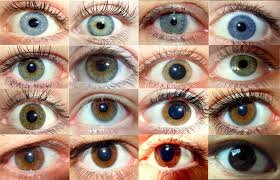
Genetic testing can provide information about variants associated with pigmentation and can sometimes estimate likely eye color. Researchers have developed prediction methods using multiple genetic markers.
However, prediction is not always perfect. Because eye color is influenced by several genes and biological processes, a genetic profile may indicate a probability rather than guarantee an exact visible outcome.
Does Eye Color Affect Vision?
Eye color itself generally does not determine how clearly a person can see. Vision depends on many structures and processes, including the cornea, lens, retina, optic nerve, and brain.
However, melanin in the iris can influence how much stray light is absorbed inside the eye. Differences in pigmentation may therefore affect certain aspects of light sensitivity for some individuals, although eye color is not a simple measure of visual ability.
Does Eye Color Affect Sensitivity to Light?
People with lighter-colored eyes are sometimes reported to experience greater sensitivity to bright light, possibly because lower pigmentation allows more internal light scattering.
However, individual experiences vary considerably. Light sensitivity can also be influenced by eye conditions, medications, pupil behavior, and other factors. Eye color alone should not be used to explain persistent or severe sensitivity to light.
Can Eye Color Be Changed?
Cosmetic contact lenses can temporarily change the visible color of the eyes by placing a colored material over the iris. These products should be used safely and appropriately because poorly fitted or improperly handled contact lenses can damage the eyes.
Permanent cosmetic procedures intended to change eye color also exist, but they can carry significant risks. The iris performs important functions in controlling light entering the eye, so changing its structure or pigmentation is not simply a cosmetic decision without potential consequences.
People Also Ask (PAA)
What is the main factor that determines eye color?
The amount and distribution of melanin in the iris are major factors. Multiple genes influence pigmentation, while the structure of the iris affects how light interacts with the tissue.
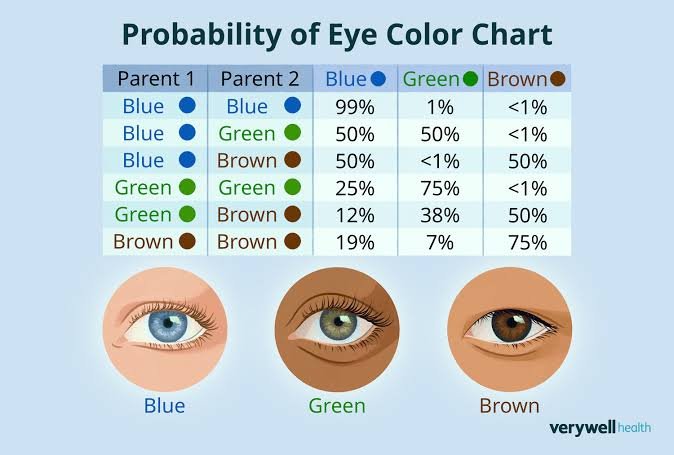
Can two parents with brown eyes have a blue-eyed child?
Yes. Because eye color involves multiple genes, two brown-eyed parents can carry genetic variants associated with lighter pigmentation and pass a combination of them to their child.
Why are some people’s eyes green?
Green eyes generally result from relatively low-to-moderate iris pigmentation combined with the way light scatters through the iris. The combination can create a green appearance.
Why do babies’ eyes sometimes change color?
The iris can continue developing pigment after birth. As melanin production and distribution change during early development, a baby’s eyes may become darker or otherwise change in appearance.
What is the rarest natural eye color?
Green eyes are commonly described as one of the least common major natural eye colors globally. However, rarity depends on how eye-color categories are defined and how populations are measured.
Can a person’s eye color change naturally?
Most adult eye colors remain relatively stable. Noticeable unexplained changes later in life can sometimes be associated with eye conditions or other factors and should be checked by an eye-care professional.
Frequently Asked Questions (FAQ)
1. Are brown eyes genetically dominant?
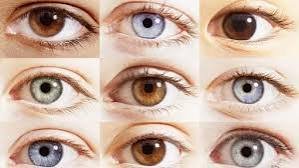
Brown eye color is often taught as dominant in simplified genetics examples, but real eye color is influenced by many genes. Therefore, the simple dominant-recessive model cannot explain every family.
2. Which gene is most important for eye color?
OCA2 and HERC2 are among the most influential genes associated with eye color, but several other genes also contribute to variation in human iris pigmentation.
3. Why do people have different shades of brown eyes?
Different amounts and distributions of melanin can produce a wide range of brown shades. Lighting and the microscopic structure of the iris can further affect how those shades appear.
4. Can siblings have completely different eye colors?
Yes. Siblings receive different combinations of genetic variants from their parents, so they can develop noticeably different eye colors.
5. Are blue eyes actually blue pigment?
No. Blue eyes do not contain a special blue pigment that creates their color. Their appearance is largely produced by low pigmentation combined with the scattering of light within the iris.
6. What causes hazel eyes?
Hazel eyes are associated with a mixture of pigmentation levels and patterns. Their combination of brown, green, and golden tones can also appear different under changing lighting conditions.
7. What causes heterochromia?
Heterochromia occurs when pigmentation differs between the eyes or within sections of an iris. It can be genetic or develop later because of other biological factors.
8. Can eye color tell you exactly where someone is from?
No. Eye color can be more common in some populations than others, but it cannot reliably identify a person’s geographic or ancestral origin by itself.
Conclusion
Different human eye colors are the result of a complex interaction between genetics, melanin, iris structure, and light. Genes such as OCA2 and HERC2 play important roles in regulating pigmentation, while several additional genes contribute to the final pattern and intensity of color. The amount and distribution of melanin help produce darker shades such as brown, while lower pigmentation allows structural light-scattering effects to contribute more strongly to blue, green, gray, and other lighter appearances.
Eye color also demonstrates why human genetics cannot always be reduced to simple rules. Children can inherit combinations of genetic variants that produce eye colors different from those of their parents or siblings, and the appearance of the iris can change with lighting and development. From the microscopic behavior of pigment cells to the inheritance of DNA across generations, eye color is a visible example of how genetics and biology work together to create human diversity.