
When you look at the night sky, stars appear as tiny points of light scattered across the darkness. Some look brighter than others, while a few can even be seen without a telescope. Although stars may appear small from Earth, many are enormous spheres of extremely hot gas producing tremendous amounts of energy deep inside their cores.
The light from a star is not simply reflected light like sunlight bouncing from a planet or the glow of an object illuminated by a lamp. Stars generate their own energy through powerful nuclear reactions. Understanding how this happens reveals why stars shine for millions or billions of years and how the energy produced inside them eventually reaches space.
What Exactly Is a Star?
A star is a massive astronomical object made primarily of extremely hot plasma, with hydrogen and helium making up most of its composition. Gravity pulls the material inward, creating enormous pressure and temperature toward the center. These conditions allow nuclear reactions to occur in the star’s core.
Stars come in many different sizes, masses, temperatures, and colors. A star’s mass strongly influences how hot it becomes, how quickly it uses its fuel, and how long it remains active. Some stars are relatively cool and faint, while massive stars can be millions of times more luminous than the Sun.
Where Does a Star’s Energy Come From?
The primary source of energy for most stars during the longest stage of their lives is nuclear fusion. Nuclear fusion occurs when light atomic nuclei combine under extremely high temperature and pressure, forming heavier nuclei and releasing energy.
Inside a star like the Sun, hydrogen nuclei eventually combine through a series of reactions that produce helium. A small amount of mass is converted into energy during this process. The relationship between mass and energy is described by Einstein’s famous equation, E = mc².
What Is Nuclear Fusion?
Nuclear fusion is a process in which atomic nuclei join together. Atomic nuclei contain protons and neutrons, and bringing positively charged nuclei close together requires enormous energy because they naturally repel one another.
The core of a star provides the extreme conditions needed for fusion to occur. Temperatures reach millions of degrees, while the immense pressure created by gravity keeps the material packed together. Under these conditions, some nuclei can overcome their electrical repulsion and participate in fusion reactions.
How Does Fusion Work Inside the Sun?
The Sun primarily produces energy through a sequence of reactions known as the proton-proton chain. In this process, hydrogen nuclei undergo several steps that ultimately result in the formation of helium.
The complete process releases energy in different forms, including energetic particles and radiation. The Sun also produces neutrinos during these reactions, and some of these particles pass through the Sun and continue into space.
Why Does Fusion Release Energy?
The reason fusion can release energy is connected to the masses of atomic nuclei. The helium nucleus produced by hydrogen fusion has slightly less mass than the total mass of the particles that originally formed it.
That missing mass has not simply disappeared. It has been converted into energy according to the relationship between mass and energy. Even a very small amount of converted mass can produce a huge quantity of energy because the speed of light squared is an enormous number.
What Happens to Energy After It Is Produced?
Energy created in a star’s core does not immediately travel straight outward. Inside a star, matter is extremely dense, so photons can interact repeatedly with particles as they move through the interior.
A photon may be absorbed, re-emitted, scattered, or redirected countless times. Because of these interactions, energy produced deep inside the star can take a very long time to make its way toward the surface.
Eventually, energy reaches the outer layers and is radiated into space. Once radiation escapes from the star’s visible surface, it can travel enormous distances before reaching planets, telescopes, and our eyes.
How Does Energy Move Through a Star?
Energy can travel through different regions of a star by different physical processes. In some areas, radiation is the dominant method, while in other regions hot material physically moves and carries energy through convection.
Radiative transport occurs when energy moves through the star as electromagnetic radiation. Convective transport occurs when hotter material rises and cooler material sinks, creating large-scale circulation within the star.
The exact structure depends on the star’s mass, temperature, composition, and stage of development. This means that not every star transports energy in precisely the same way.
What Is the Star’s Core?
The core is the central region of a star where temperature and pressure are greatest. For stars that are actively fusing hydrogen, this is generally where most of the nuclear energy is produced.
Gravity compresses the material toward the center, creating the conditions necessary for fusion. The core can therefore be thought of as the star’s main energy-producing region during its hydrogen-burning stage.
Although the core generates energy, the visible surface of a star is much farther out. Energy must pass through layers of stellar material before it can escape into space.
Why Does Gravity Matter?
Gravity is essential to a star’s existence because it pulls the star’s enormous mass inward. Without gravity, the hot gas would spread outward rather than remaining concentrated into a stable astronomical object.
At the same time, the pressure created by the hot interior pushes outward. A stable star exists when inward gravitational effects and outward pressure are balanced closely enough to maintain its structure.
This balance is called hydrostatic equilibrium. It allows a star to remain stable for long periods while continuously producing energy in its core.
Why Is the Sun Shining?
The Sun shines because nuclear fusion is occurring in its core. Hydrogen is being converted into helium, and the reactions release energy that eventually reaches the solar surface.
The Sun’s visible surface has a temperature of roughly 5,500 degrees Celsius, which causes it to emit large amounts of visible light along with infrared and other forms of electromagnetic radiation.
The sunlight that reaches Earth therefore represents energy generated deep inside the Sun. It travels outward through the Sun’s interior before escaping into space and crossing the distance between the Sun and Earth.
Why Do Stars Have Different Colors?
Stars can appear red, orange, yellow, white, or blue. Their color is strongly related to their surface temperature. Cooler stars generally emit more of their visible radiation toward the red end of the spectrum, while hotter stars emit more toward the blue end.
The color does not simply tell us what material a star is made from. Instead, it provides important information about the temperature of the star’s visible surface.
Astronomers can analyze stellar color and spectra to learn about temperature, composition, motion, and other properties. A star’s light therefore contains far more information than simply making the night sky bright.
Why Are Some Stars Brighter Than Others?
A star’s apparent brightness depends on several factors. One of the most important is its distance from Earth. A nearby star can appear brighter than a much more luminous star that is extremely far away.
The star’s actual luminosity also matters. Larger or hotter stars can release much more energy than smaller, cooler stars. Some stars are intrinsically hundreds or thousands of times more luminous than the Sun.
Astronomers distinguish between apparent brightness, which describes how bright a star looks from Earth, and intrinsic luminosity, which describes how much energy the star actually emits.
Does a Bigger Star Always Shine More?
Not necessarily, although mass and size strongly influence stellar behavior. A massive star can have an enormous energy output, but the relationship between size, temperature, and luminosity is more complicated than simply saying bigger means brighter.
A star’s surface temperature and radius both influence its total energy output. A relatively small but very hot star can emit a great deal of energy, while a larger but cooler star can have a different luminosity.
This is why astronomers study multiple properties together rather than judging a star solely by its physical size.
Why Can Stars Shine for So Long?
Stars contain enormous amounts of nuclear fuel, and their immense mass provides the pressure needed to sustain fusion. However, they do not use all of their fuel at once.
The rate at which a star consumes its fuel depends strongly on its mass. Massive stars have hotter cores and generally consume their fuel much faster than lower-mass stars.
Lower-mass stars can therefore remain active for extremely long periods. The smallest stars are expected to have lifetimes far longer than the current age of the universe.
What Happens When a Star Runs Out of Hydrogen?
When the hydrogen available for fusion in a star’s core becomes depleted, the balance inside the star begins to change. The core can contract while surrounding layers respond to the changing conditions.
For stars with enough mass, the core can become hot enough for additional types of nuclear fusion to occur. Hydrogen fusion may also continue in a shell surrounding the core.
As the star evolves, its size, temperature, brightness, and internal structure can change dramatically. The final stages depend heavily on the star’s original mass.
Do All Stars Produce Energy in the Same Way?
Stars do not all produce energy through exactly the same fusion reactions throughout their entire lives. During the main stage of their development, many stars fuse hydrogen into helium, but the details can differ depending on their mass.
For stars similar to the Sun, the proton-proton chain is the dominant hydrogen-fusion process. More massive stars can rely heavily on a different series of reactions called the carbon-nitrogen-oxygen cycle.
Later in their lives, sufficiently massive stars can fuse heavier elements. Eventually, the available nuclear fuel and the structure of the star determine what happens next.
Why Don’t Stars Collapse Under Their Own Gravity?
A star contains enormous mass, so gravity constantly pulls its material inward. If gravity were the only force involved, the star would continue collapsing.
However, the extremely hot interior produces pressure that pushes outward. Nuclear fusion supplies energy that helps maintain the high temperatures supporting this pressure during stable stages of stellar evolution.
The balance between gravity and pressure allows a star to remain stable. When its internal fuel sources change, this balance can also change, causing the star to expand, contract, or transform.
How Does Starlight Reach Earth?
Once light escapes from a star’s surface, it travels through space as electromagnetic radiation. In the vacuum of space, there is no need for air or another material to carry light.
The distance between stars and Earth can be enormous. Light from some stars takes years, hundreds of years, or much longer to reach us.
When we observe a distant star, we are therefore seeing light that left that star in the past. The night sky provides a natural record of earlier states of distant astronomical objects.
What Can Scientists Learn From Starlight?
Starlight contains information about the physical conditions of the star that produced it. By splitting light into a spectrum, astronomers can identify patterns associated with different chemical elements.
These spectral lines can reveal the presence of hydrogen, helium, oxygen, iron, and many other elements. Scientists can also use changes in the spectrum to investigate temperature, movement, rotation, and magnetic activity.
In this way, astronomers can study stars that are far too distant to visit. Light acts as a messenger carrying information across enormous stretches of space.
Why Are Stars Important to the Universe?
Stars do much more than illuminate the night sky. They are major sources of energy and are responsible for producing many of the elements that exist throughout the universe.
The interiors of stars create elements through nuclear reactions. When certain stars die, powerful events can distribute newly formed elements into surrounding space.
These materials can later become part of new stars, planets, moons, asteroids, and other objects. In this sense, stars participate in the long-term chemical evolution of galaxies.
How Do Stars Eventually Die?
Stars do not shine forever. Their final evolution depends strongly on their mass. Lower-mass stars can gradually shed their outer layers and leave behind dense stellar remnants known as white dwarfs.
Massive stars can undergo much more dramatic endings. After exhausting several possible fusion stages, some massive stars can collapse and explode as supernovae, leaving behind neutron stars or black holes depending on the circumstances.
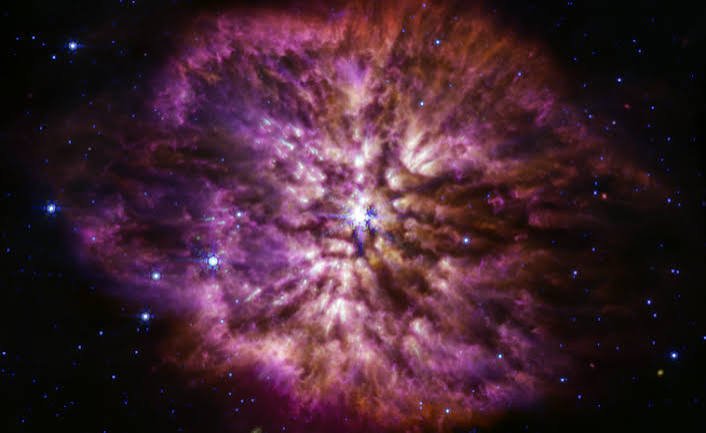
The death of a star can therefore be a major event that transforms its surroundings. Material released into space can later contribute to the formation of new astronomical systems.
Can We See the Energy Being Produced Inside a Star?
We cannot directly look into the core of an ordinary star because its outer layers are extremely dense and opaque to visible light. The visible surface hides the nuclear reactions occurring much deeper inside.
However, scientists can investigate stellar interiors indirectly using observations of light, neutrinos, vibrations, and mathematical models. The Sun has been studied especially closely because it is relatively nearby.
Neutrinos are particularly valuable because they are produced by nuclear reactions and can pass through matter much more easily than ordinary photons. Detecting solar neutrinos provides direct evidence about processes occurring inside the Sun.
Why Don’t Stars Burn Like Fire?
The word “burn” is sometimes used informally when discussing stars, but stellar energy production is not ordinary chemical combustion. Fire involves chemical reactions, usually involving oxygen, while stars primarily generate their energy through nuclear fusion.
Chemical burning releases energy by rearranging electrons and chemical bonds. Nuclear fusion involves changes in atomic nuclei and can release vastly greater amounts of energy per unit of mass.
This distinction is important because stars would not be able to shine for astronomical periods using ordinary fire. Their tremendous lifetimes and energy output require a nuclear source.
What Happens to a Star’s Energy in Space?
Once energy leaves a star, it spreads outward through space. The radiation becomes distributed over increasingly larger areas as it travels farther from the source.
A planet located close to a star can therefore receive much more energy per unit area than a planet located far away. This distance effect is important for determining the temperatures and environments of planets.
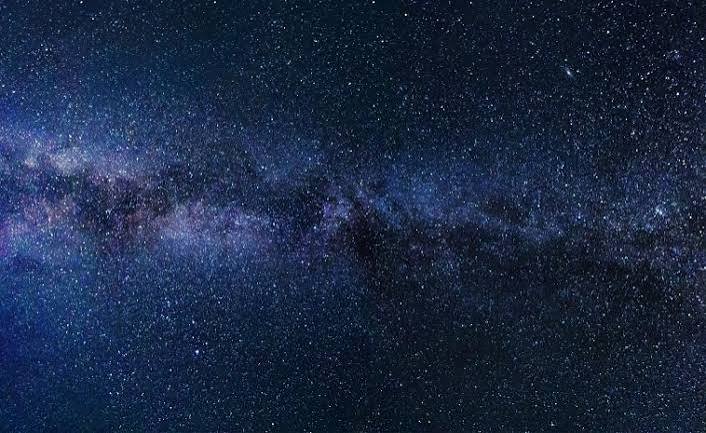
Only a tiny fraction of a star’s total radiation may reach any particular planet. Nevertheless, even that small portion can have enormous consequences, especially when the planet is relatively close to its star.
How Do Stars Maintain Their Energy Balance?
A stable star continuously balances energy production in its interior with the energy it releases from its surface. If energy production or internal conditions change, the star can adjust its structure.
For example, if the core changes in a way that affects pressure or energy generation, layers of the star may expand or contract. These changes can influence temperature, density, and the rate of nuclear reactions.
Stellar structure is therefore a dynamic process rather than a completely fixed condition. Stars spend much of their lives in relatively stable phases, but their internal properties continue changing over time.
People Also Ask
Why do stars shine at night?
Stars shine both day and night, but sunlight makes most stars difficult to see during the daytime. Earth’s atmosphere scatters sunlight across the sky, creating a bright background that overwhelms the much fainter light from distant stars.
What makes a star produce light?
Stars produce energy primarily through nuclear fusion in their cores during their main stages of life. The energy eventually reaches the surface and is released into space as electromagnetic radiation, including visible light.
Why does the Sun shine?
The Sun shines because hydrogen nuclei are undergoing nuclear fusion in its core. These reactions produce helium and release energy, which eventually escapes from the Sun as radiation.
Do stars burn like fire?
No. Stars do not produce their energy through ordinary combustion. Their main energy source is nuclear fusion, which involves changes in atomic nuclei rather than chemical burning.
Why are some stars blue and others red?
A star’s color is strongly related to its surface temperature. Hotter stars tend to appear bluer, while cooler stars tend to appear redder or orange.
Can stars run out of energy?
Stars can eventually exhaust the nuclear fuel available for particular stages of fusion. When this happens, their internal structure changes and they enter later stages of stellar evolution.
Frequently Asked Questions
How long can a star shine?
The lifetime depends greatly on the star’s mass. Some stars can remain active for millions of years, while low-mass stars can potentially shine for extremely long periods, far longer than the current age of the universe.
What is the main fuel of a star?
For most stars during their main sequence stage, hydrogen is the primary nuclear fuel. Hydrogen fusion produces helium and releases energy that supports the star and powers its radiation.
Where does fusion happen in a star?
Fusion occurs in regions where temperature and pressure are sufficiently high, most importantly in the core during stable hydrogen-burning stages. Later stages can involve fusion in different regions of evolved stars.
Why doesn’t the Sun explode?
The Sun is maintained in a balance between inward gravity and outward pressure. Its energy-producing reactions occur steadily rather than as a runaway explosion, allowing it to remain relatively stable for billions of years.
Is starlight actually energy?
Yes. Light is electromagnetic radiation and carries energy. The radiation emitted by stars can travel through space and transfer energy to planets and other objects.
How do scientists know fusion happens inside stars?
Scientists combine observations of stellar light and spectra with models of stellar physics. For the Sun, measurements of solar neutrinos also provide direct evidence that nuclear reactions are taking place in its core.
What happens when a star stops shining?
A star does not usually switch off suddenly. Instead, its appearance and energy production change as its nuclear fuel is consumed. Depending on its mass, it may become a white dwarf, explode as a supernova, or leave behind another dense remnant.
Conclusion
Stars shine because their enormous interiors provide the temperature and pressure required for nuclear fusion. During much of a star’s life, hydrogen nuclei are transformed into helium, and a small amount of mass is converted into a tremendous amount of energy. That energy travels through the star’s interior before finally escaping from its surface as radiation, including the visible light we see from Earth.
The light of a star is therefore more than a beautiful point in the night sky. It is evidence of powerful physical processes taking place millions or billions of kilometers away. By studying starlight, scientists can learn about temperature, chemical composition, motion, age, and stellar evolution. Every shining star is a natural laboratory where gravity, nuclear physics, and energy work together on a cosmic scale.