
The human body is constantly working to keep its internal temperature within a safe range. Whether you are walking under the hot sun, sitting in a cold room, exercising, or sleeping at night, your body continuously adjusts its heat production and heat loss. You usually do not notice these changes because most of the process happens automatically.
Temperature control is essential because the chemical reactions that keep cells alive depend on conditions inside the body remaining relatively stable. If the body becomes too hot or too cold, important organs and biological processes can begin to function improperly. The body’s ability to maintain a relatively stable internal environment is known as homeostasis, and temperature regulation is one of its most important examples.
What Is Body Temperature?
Body temperature refers to the temperature of the body’s internal environment. It is influenced by how much heat the body produces and how quickly it loses heat to the surrounding environment. Although body temperature is often described using a single number, it naturally changes throughout the day and can vary between individuals.
The temperature of the body’s deeper tissues is more tightly regulated than the temperature of the skin. This distinction is important because the skin is directly exposed to the surrounding environment. On a cold day, your skin may become quite cool while the body works to protect the temperature of its internal organs.
The body does not need to maintain exactly the same temperature every second. Instead, it constantly makes small adjustments to keep internal conditions within an appropriate range. These adjustments involve the brain, nervous system, blood vessels, muscles, sweat glands, and several other parts of the body.
Why Temperature Regulation Is Important
Cells depend on carefully controlled chemical reactions. Many of the proteins and enzymes involved in metabolism work best within particular temperature conditions. If the internal environment changes too far from normal, these reactions can become less efficient or even dangerous.
The brain is especially sensitive to major temperature changes. Other organs, including the heart, kidneys, and muscles, can also be affected when the body’s temperature becomes excessively high or low.
Temperature regulation therefore protects the entire body. Instead of waiting until conditions become dangerous, the body continuously monitors changes and responds before they become too severe. This automatic system allows humans to function across a wide variety of environmental conditions.
The Hypothalamus: The Body’s Temperature Control Center
A small region of the brain called the hypothalamus plays a central role in temperature regulation. It receives information about the body’s temperature and helps coordinate responses when conditions change.
The hypothalamus receives temperature-related information from sensors located inside the body and near the surface of the skin. It compares this information with the body’s regulated temperature range and helps determine whether the body needs to gain or lose heat.
When the body becomes too warm, the hypothalamus can activate processes that increase heat loss. When the body becomes too cold, it can trigger mechanisms that conserve or produce heat.
This makes the hypothalamus an important part of the body’s internal control system. It does not work alone, however. It communicates with the nervous system, blood vessels, muscles, sweat glands, and other tissues to produce the appropriate response.
How the Body Detects Temperature Changes
The body contains temperature-sensitive nerve endings that detect changes in the surrounding environment and tissues. Many of these sensors are located in the skin, where they provide information about external conditions.
If you enter a cold environment, temperature receptors in your skin detect the drop in temperature and send signals through the nervous system. The brain can then respond by reducing heat loss and increasing heat production.
The body also monitors its internal temperature. This is important because the temperature of the surrounding skin does not always represent the temperature of the body’s core. Internal sensors provide information that helps the brain protect vital organs.
Together, these systems give the brain a continuous stream of information about thermal conditions. The body can therefore respond to both external temperature changes and changes occurring inside itself.
How the Body Produces Heat
The body produces heat naturally as a result of metabolism. Every time cells use energy, some of that energy is released as heat. This happens continuously, even when you are resting.
The liver, brain, heart, and other organs generate heat through their normal activities. Muscles also produce significant amounts of heat, especially during physical activity.
Exercise is a clear example. When you run, cycle, or perform another demanding activity, your muscles use more energy. As their metabolic activity increases, more heat is produced. The body then needs to remove this extra heat to prevent excessive warming.
Heat production is therefore not simply a special emergency response. It is an unavoidable result of normal biological activity, with the amount changing according to what the body is doing.
Why Shivering Makes You Warmer
When the body becomes cold, one of its fastest responses is shivering. Shivering consists of rapid, involuntary muscle contractions that produce additional heat.
These contractions require energy. As muscles repeatedly contract and relax, metabolic activity increases and heat is released. Although shivering can feel uncomfortable, it is an important short-term defense against falling body temperature.
Shivering is particularly useful when the environment is cold enough that ordinary heat conservation is not sufficient. The brain activates these muscle contractions automatically rather than waiting for a person to consciously decide to shiver.
If cold exposure continues for a long period, however, shivering alone may not be enough to maintain a safe body temperature. Continued heat loss can eventually overwhelm the body’s ability to compensate.
How Blood Vessels Control Heat Loss
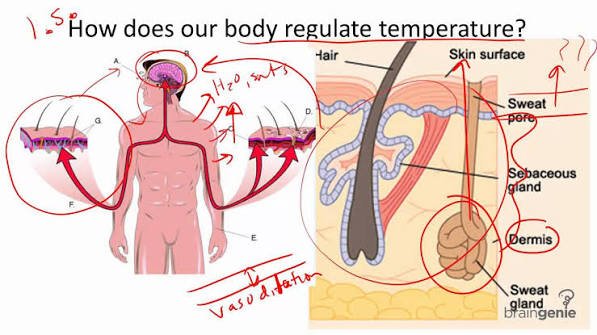
Blood circulation is another major part of temperature regulation. Blood carries heat from warmer internal tissues toward the skin, where that heat can be transferred to the environment.
When the body needs to conserve heat, blood vessels near the skin can become narrower. This process is called vasoconstriction. It reduces blood flow near the surface and helps limit heat transfer from the body’s core to the surrounding air.
When the body needs to lose heat, skin blood vessels can widen. This process is called vasodilation. Increased blood flow near the skin brings more internal heat toward the surface, where it can be released.
This system allows the body to adjust heat transfer without dramatically changing its internal temperature. The skin therefore acts as an important interface between the body’s internal environment and the outside world.
Why Your Skin Gets Red When You Are Hot
When the body is trying to lose heat, increased blood flow through the skin can make the skin appear warmer or redder. More blood reaches vessels close to the surface, allowing heat to move from the body toward the environment.
This response is especially noticeable in warm conditions or during exercise. The skin may become flushed because the body is increasing circulation near the surface.
The amount of heat that can be lost this way depends on environmental conditions. If the surrounding air is already very hot, simply sending more blood to the skin may not remove enough heat.
This is why the body uses multiple cooling mechanisms rather than depending entirely on blood flow.
How Sweating Cools the Body
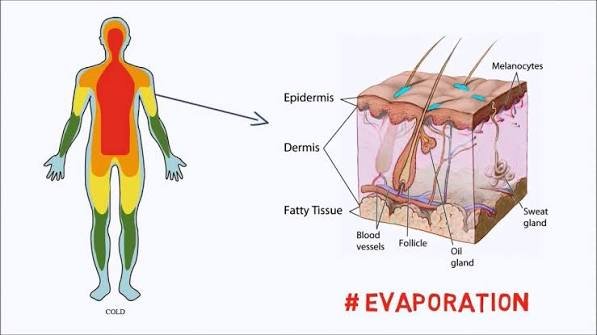
Sweating is one of the body’s most effective cooling mechanisms under many conditions. Sweat glands release fluid onto the surface of the skin, and when that water evaporates, it removes heat from the body.
Evaporation is particularly useful because it transfers energy away from the skin. The cooling effect depends on how easily sweat can evaporate into the surrounding air.
This explains why humid weather can feel especially uncomfortable. When the air already contains a large amount of water vapor, sweat evaporates less efficiently. You may continue sweating, but less cooling occurs.
During exercise, sweating can become an important part of temperature control because muscle activity produces substantial heat. The body increases sweat production to help prevent its internal temperature from rising too far.
Why Humidity Affects Cooling
Humidity describes the amount of water vapor present in the air. When humidity is high, evaporation from the skin becomes more difficult.
Imagine two environments with the same air temperature. In the drier environment, sweat can evaporate more easily, providing stronger cooling. In the humid environment, sweat may remain on the skin instead of evaporating efficiently.
This is why a hot and humid day can feel much more difficult than a hot and dry day. The body may produce plenty of sweat, but the cooling benefit is reduced when evaporation is restricted.
Humidity therefore influences one of the body’s most important cooling mechanisms. Environmental temperature is only one part of the thermal challenge; moisture in the air also matters.
What Happens When You Exercise?
Exercise creates a major challenge for temperature regulation because active muscles use more energy and generate more heat.
As exercise begins, metabolism increases. More blood is directed toward working muscles, while the body also increases circulation to the skin to help remove heat. Sweat production can increase as well.
These systems work together to keep the body’s internal temperature from rising too quickly. The harder and longer you exercise, the greater the demand on these cooling mechanisms.
If heat production becomes greater than heat loss, body temperature can continue rising. This is one reason prolonged physical activity in hot environments can place significant stress on the body.
Why You Feel Hot After Physical Activity
After intense exercise, your muscles and other tissues may remain warmer because metabolic activity has been elevated. The body may continue sweating and sending increased blood flow toward the skin even after you stop moving.
This continued cooling response helps remove excess heat that accumulated during activity. Your heart may also continue beating faster for a while as circulation gradually returns toward its resting state.
The sensation of being hot after exercise is therefore a normal consequence of increased heat production. The body needs time to transfer that heat toward the skin and release it.
Once heat production falls and cooling catches up, body temperature gradually moves back toward its usual level.
How the Body Responds to Cold Weather
Cold environments increase the rate at which heat can leave the body. The body responds by activating several heat-conserving mechanisms.
Blood vessels near the skin can narrow, reducing surface blood flow. Muscles may begin shivering to generate additional heat. Behavioral responses also become important, such as seeking shelter, putting on warmer clothing, or moving to a warmer environment.
The body can also adjust metabolic activity under certain circumstances. However, physiological defenses have limits. If heat loss continues for too long, internal temperature can eventually fall to dangerous levels.
This is why external protection remains important. The body’s temperature-control system is powerful, but it cannot completely overcome extreme environmental conditions.
Why You Get Goosebumps
Goosebumps are another response associated with cold or certain emotional experiences. Small muscles attached to hair follicles contract, causing the hairs to stand more upright and producing small bumps on the skin.
In humans, goosebumps have relatively little effect on temperature regulation because our bodies have much less body hair than many other mammals. In animals with thick fur, raising the hair can trap a layer of insulating air.
For humans, goosebumps are more of a leftover feature from an older biological mechanism. The response still occurs even though it provides limited protection against modern environmental temperatures.
It is a good example of how human physiology can preserve responses that were more useful in our evolutionary past.
How the Body Responds to Fever
A fever is different from simply becoming overheated. During a fever, the body’s temperature-regulating system changes its internal target under the influence of immune responses.
When the temperature target rises, a person may initially feel cold even though their body temperature is increasing. The body can respond with shivering and reduced heat loss as it works toward the new regulated level.
Once the fever begins to come down, the body may switch toward heat-loss mechanisms such as sweating and increased blood flow through the skin.
This demonstrates how temperature regulation is controlled by the brain rather than being a simple reaction to outside temperature. The body actively adjusts its regulated state in response to internal signals.
Why We Feel Cold During a Fever
During the early stages of a fever, the body’s temperature target may rise. Because the actual temperature has not yet reached this new target, the brain interprets the body as being too cold relative to the new setting.
This can cause sensations of coldness, chills, and shivering. The body may narrow skin blood vessels and reduce heat loss while generating additional heat through muscle activity.
Once the internal temperature reaches the elevated target, the intense chills may decrease. A person can then feel unusually warm.
When the fever resolves and the temperature target returns toward normal, the body may suddenly need to release extra heat. Sweating can occur as part of this cooling process.
How the Nervous System Helps
The nervous system connects temperature sensors with the brain and the organs responsible for temperature regulation. It allows the body to respond rapidly when conditions change.
Signals from temperature receptors travel toward the brain, where they are processed alongside information about internal temperature. The brain then sends instructions through nerves and other control systems.
These signals can influence blood vessels, sweat glands, muscles, and metabolic activity. The result is a coordinated response rather than a single isolated action.
Because the nervous system operates continuously, temperature regulation can begin before a person consciously thinks about feeling hot or cold.
Behavioral Temperature Control
Not all temperature regulation happens automatically inside the body. Humans also use conscious behavior to manage their thermal environment.
When you feel cold, you may put on a jacket, move indoors, drink something warm, or increase physical activity. When you feel hot, you may seek shade, remove extra clothing, use a fan, or drink a cool beverage.
These behaviors can be extremely effective because they reduce the workload placed on the body’s physiological systems.
The brain’s perception of temperature therefore has an important behavioral function. Feeling too hot or too cold encourages actions that can help restore a comfortable and safer thermal environment.
Why Clothing Helps Control Body Temperature
Clothing does not directly heat the body in the same way that metabolism does. Instead, it changes how quickly heat moves between the body and the environment.
Layers of clothing can trap air close to the skin, reducing heat loss in cold conditions. In warm conditions, lightweight and breathable clothing can support heat transfer and sweat evaporation.
The effectiveness of clothing depends on the material, thickness, airflow, humidity, and activity level. A person exercising in heavy clothing may produce more heat and have difficulty releasing it.
Clothing is therefore an extension of the body’s temperature-control strategy. It modifies the environment immediately surrounding the skin.
How the Body Balances Heat Gain and Heat Loss
At any moment, the body’s temperature reflects a balance between heat production, heat storage, and heat loss.
Heat can leave the body through radiation, conduction, convection, and evaporation. Radiation involves transferring heat to the surrounding environment, while conduction occurs when heat moves through direct contact with another material.
Convection involves movement of air or fluid around the body. For example, moving air can carry heat away from the skin. Evaporation removes heat when water changes from liquid to vapor, especially through sweating.
The body constantly adjusts its internal processes according to these conditions. Temperature regulation is therefore a dynamic balance rather than a single mechanism.
What Happens When the Body Gets Too Hot?
If the body gains heat faster than it can lose it, internal temperature begins to rise. The body responds by increasing mechanisms such as sweating and blood flow to the skin.
These responses can be effective for a while, but they have limits. Excessive heat exposure, intense exercise, high humidity, or inadequate fluid replacement can make cooling more difficult.
As body temperature rises too far, normal physiological processes can become disrupted. Severe overheating can become a medical emergency because organs and cells are sensitive to excessive temperature.
This is why recognizing signs of dangerous heat exposure and moving to a cooler environment are important when the body’s cooling mechanisms are being overwhelmed.
What Happens When the Body Gets Too Cold?
When heat loss exceeds heat production, the body’s internal temperature begins to fall. The first responses generally focus on conserving and generating heat.
Blood vessels near the skin can narrow, shivering can begin, and behavioral instincts encourage the person to seek warmth. These mechanisms can slow the loss of heat and increase heat production.
If cold exposure continues, however, the body’s ability to compensate can eventually become overwhelmed. Severe cooling can interfere with normal brain and muscle function.
The progression shows why temperature regulation is protective but not unlimited. The body can defend itself against moderate environmental changes, but extreme conditions require external protection.
Why Temperature Regulation Is an Example of Homeostasis
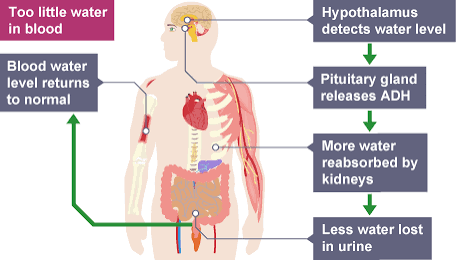
Homeostasis is the body’s ability to maintain relatively stable internal conditions despite changes in the external environment.
Temperature control is a classic example because the body continuously detects changes, compares them with an internal target, and activates responses that move conditions back toward an appropriate range.
If temperature rises, cooling mechanisms become more active. If temperature falls, heat-conserving and heat-producing mechanisms increase.
This process resembles a feedback system. Information about the current condition influences a response, and the response changes the condition being measured. The cycle continues throughout life.
People Also Ask
How does the human body keep its temperature stable?
The body uses the brain, temperature sensors, blood vessels, sweat glands, muscles, and other systems to balance heat production and heat loss. The hypothalamus plays a central role in coordinating these responses.
What part of the brain controls body temperature?
The hypothalamus is the main brain region involved in regulating body temperature. It receives temperature-related information and coordinates responses that help maintain internal stability.
Why do humans sweat when they are hot?
Sweating helps cool the body when sweat evaporates from the skin. The evaporation process removes heat from the body’s surface and can lower internal temperature.
Why do we shiver when we are cold?
Shivering involves rapid involuntary muscle contractions. These contractions increase metabolic activity and generate additional heat to help defend body temperature.
How does blood help regulate temperature?
Blood transports heat around the body. Blood vessels near the skin can narrow to conserve heat or widen to increase heat transfer toward the skin when cooling is needed.
Why does exercise make body temperature rise?
Working muscles require more energy and produce more heat as their metabolic activity increases. The body responds by increasing cooling mechanisms such as sweating and skin blood flow.
Frequently Asked Questions
What is the normal human body temperature?
There is no single temperature that is identical for every person at all times. Body temperature naturally varies with factors such as time of day, activity, age, measurement method, and individual differences.
Does the skin control body temperature?
The skin plays an important role in temperature regulation because it contains temperature sensors, blood vessels, and sweat glands. However, the brain coordinates the overall process.
Why do we feel cold when blood vessels narrow?
Narrowing blood vessels near the skin reduces warm blood flow to the surface. This conserves heat in the body’s deeper tissues but can make the skin feel colder.
Can the human body regulate temperature without sweating?
Yes. Sweating is only one cooling mechanism. The body can also increase blood flow to the skin and lose heat through radiation, conduction, and convection.
Why does humidity make hot weather harder to tolerate?
High humidity slows the evaporation of sweat. Because evaporation is an important cooling mechanism, reduced evaporation can make it more difficult for the body to release excess heat.
What is homeostasis?
Homeostasis is the process of maintaining relatively stable internal conditions despite changes outside the body. Temperature regulation is one of the clearest examples of homeostasis.
Why does the body temperature change during the day?
Body temperature naturally follows daily biological rhythms. It can also be influenced by physical activity, food intake, sleep, hormones, environmental conditions, and other factors.
Conclusion
The human body controls its temperature through a sophisticated network involving the hypothalamus, nervous system, temperature sensors, blood vessels, sweat glands, muscles, and behavior. When the body becomes warm, it can increase skin blood flow and sweating to release heat. When conditions become cold, it can conserve heat through blood vessel narrowing and generate additional warmth through shivering and increased metabolic activity.
This constant balancing act is an important example of homeostasis. The body does not simply react after temperature changes become dangerous; it continuously monitors conditions and makes adjustments throughout the day. Thanks to this remarkable system, humans can maintain a relatively stable internal environment while living, working, sleeping, and exercising across a wide range of temperatures.